
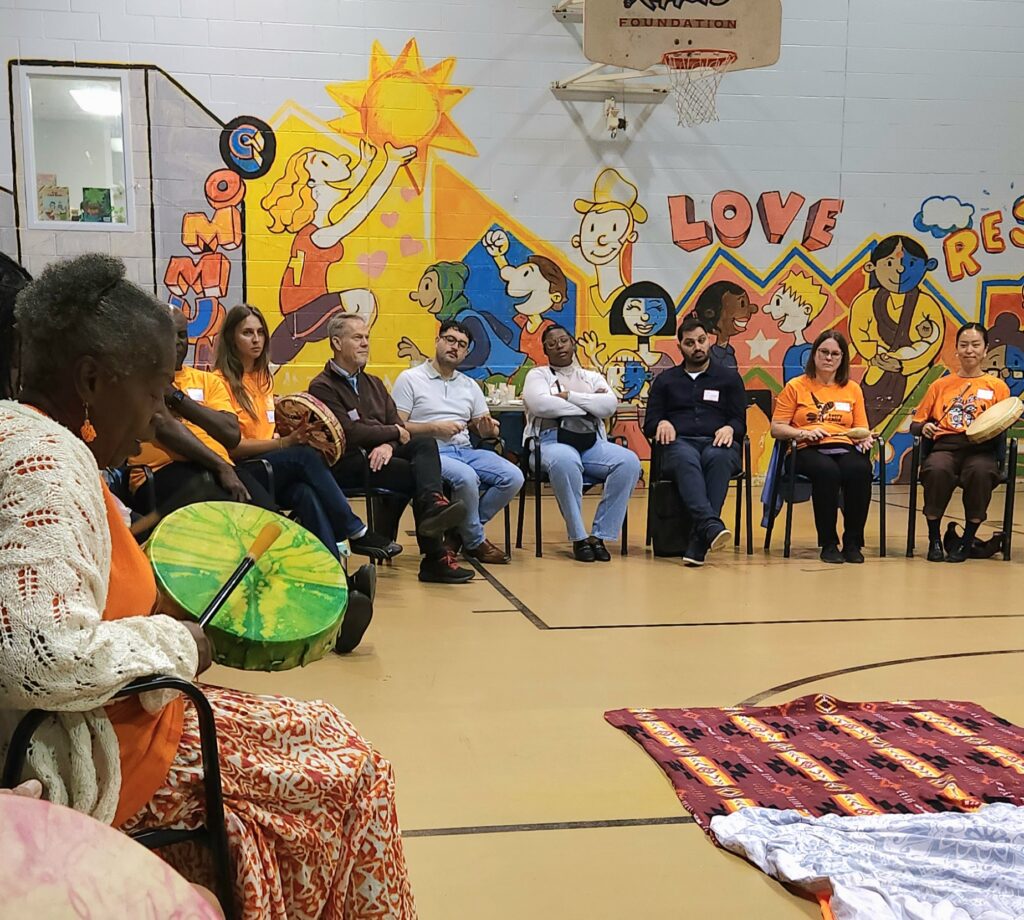
“Truth and Reconciliation. There is a meaning to the order of those words,” said J’aime to a large group of Settlement House workers from Canada and the United States. We were sitting in a circle with a space left for the spirits of ancestors to join us. Before she began the drum circle, she shared her own family’s history as part of the larger story of violence against indigenous people in Canada to give context to what we were commemorating.
As part of the International Network of Settlement Houses (IFS), Goddard Riverside sent six employees to Toronto in September to exchange ideas and learn from our neighbors to the north. For one week, we ventured into the ground work of organizations who tackle the same similar issues through the Canadian system, to see the realities of it, learn the issues, and learn about their successes and how to apply them at home.
This also happened to be a historic week, as September 30th marked the Day of Truth and Reconciliation in Canada. On a national level, Canada was taking a day to acknowledge its darker history with its indigenous population; the holiday also highlights the generations of resilience and the work that has been put towards healing communities from centuries of systemic oppression. Ads from the Canadian government ran on TV and buses and children got the day off from school.
The Toronto Neighborhood Center hosted the event in a gym with murals showcasing just how many backgrounds make the Canadian community what it is. Vibrant orange shirts and name tags honored Phyllis Webstad, the creator of Orange Shirt Day, which later became the National Day of Truth and Reconciliation. At six years old, Webstad was taken to one of the notorious residential schools that forcibly assimilated indigenous children; she was wearing a brand-new orange shirt given to her by her grandmother, which was immediately taken from her and never returned. It has become a symbol of the joy that was taken from entire generations and why some of the shirts had the message: “EVERY CHILD MATTERS.”
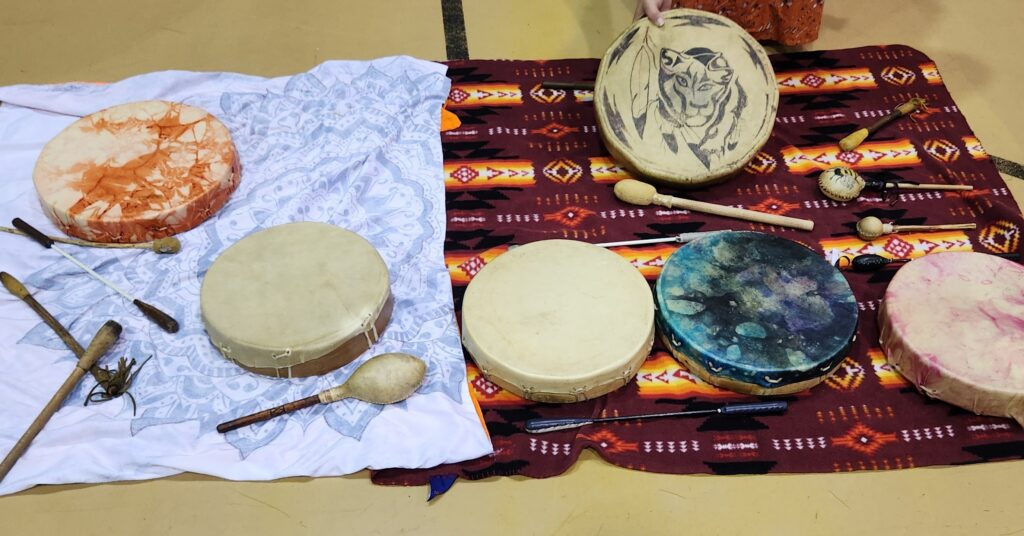
But despite the pain of centuries of displacement and genocide, the message J’aime brought to the room was one of resilience and hope. Everyone was welcomed with an initial cleansing smudge before the drums were passed around. And that’s when the gap in the circle made sense. The song and drums she taught everyone allowed the room to welcome the spirits, but also feel how we were just people in community sitting as people in community have done for centuries. And we understood more than ever that a community becomes strong not just by calling itself a community, but by the support and kindness we give one another whether the day is dark or the sun is out. It might not be entirely accurate, but sitting there was necessary to understand the truth that these displaced communities were just like us, and to fully acknowledge the pain they suffered.
It wasn’t just about drums and song; it was about a much larger conversation. Community and social justice are part of Goddard’s legacy and why our hundreds of employees do what they do. Yet, our home, New York City, needs to be part of another larger conversation. We learned that acknowledging is how the conversation begins, and maybe from there, a bigger change can happen.
Goddard Riverside acknowledges that the work we do and our communities occupy the ancestral land of the Lenape people. We pay respect to the original peoples of Lenapehoking, and recognize the displacement and violence they have endured.